Honey Bee Conservation: Bees are key to our well-being. In the United States, they are vital for our food and nature. This article explores how we can save them.
Protecting honey bees is a big responsibility. It’s about taking care of our planet. In India, kids learn by doing, like tracking tigers.
We can learn from them, too. In Minnesota, kids talk about fairness and helping others; they believe we must care for each other and nature.
Saving bees means standing up for what’s right. This story invites you to join in. Let’s make saving bees a daily effort. We can make a difference in our communities and country.
Honey Bee Conservation: Key Takeaways
- Honey bee conservation links our food, culture, and ecosystem health in the United States.
- Hands-on education, from India’s field learning to U.S. classrooms, builds courage for pollinator protection.
- Youth voices in Minnesota model inclusive values that can help save the bees.
- Reflective journalism can connect personal responsibility with practical action.
- Saving pollinators is both a moral invitation and a local, daily practice we can start now.
- Stronger communities emerge when we pair empathy with simple, repeatable steps.
Why Saving Our Pollinators Matters for the United States
I wake up, pour coffee, and think about breakfast. What would it be without the buzz of bees in the fields? U.S. farming relies on these quiet workers. Protecting pollinators means we care for our food, neighbors, and land.
Here’s the simple truth: bees are key to growing fruits, nuts, and veggies. They support about one-third of global crops, valued at over $200 billion annually. Learn more at The Bee Foundation. It shows how bees boost our food security and hope.
Economic and food security impacts of pollinator protection
I think about grocery aisles and school lunches. Strong pollinator protection keeps produce diverse and affordable. This supports jobs in U.S. farming, from California orchards to Michigan berry patches.
When bees decline, prices and access suffer. Food security is about more than just supply. It’s about dignity. Protecting bees means families can enjoy fresh food, not just shelf-stable options.
Connecting bee population decline to sustainable agriculture practices.
I’ve seen fields where sustainable practices make a difference. Rotating crops, planting cover crops, and reducing chemical use help. These actions promise a future for bees and steady harvests. Better soil and diverse hedgerows support native species. These choices reduce stress on hives and lower risks during drought or heat. They connect the economy and ecology in simple terms.
How bee biodiversity supports resilient ecosystems
One species can’t do it all. Bee biodiversity spreads work across time and bloom. From bumble bees in cool mornings to honey bees at midday, many hands and wings create resilience. When landscapes welcome a variety of flowers and nesting sites, pollination is steady. This supports U.S. farming and food security. Saving bees means steadying ourselves.
News Angle: Education Programs Inspiring the Next Generation of Conservationists
I often think of a child kneeling in the dirt, listening for wings. Our education programs could be more like that—curious and alive. Being outside shapes our memories and gives meaning to saving bees. I ask myself: what if schools saw parks and gardens as places for courage? I’ve seen kids grow when they plant, observe, and share. They learn to save bees by touching the soil and noticing what blooms.

Lessons from India’s hands-on wildlife education for conservation leadership
In India, kids learn by walking forest trails. No walls or podiums, just nature. This way, they learn conservation leadership through practice. We can learn from this approach. Field notebooks and quiet observation are key. Small acts of rescue and release build empathy and skill. This is how we foster real stewardship.
Adapting outdoor, field-based learning to U.S. schools and communities
In the U.S., school gardens can be labs for pollinator protection. Neighborhood walks can help map forage gaps. Students can test soil, log bee visits, and sketch what they see.
- Plant native flowers around play yards for honey bee conservation.
- Use simple transects to count pollinators during outdoor learning.
- Partner with local parks for weekend service days to save the bees.
When I point students to resources like community-driven bee initiatives, they start planning. They lead with clarity and care.
Building empathy and courage in youth to advocate for pollinator protection
Empathy grows when young people see their work matter. A buzzing bed of milkweed at noon. A water dish for a tired bee. Small wins build steady hearts. “Start where your feet are. Notice one living thing. Then protect its home.” I’ve seen youth advocacy through public testimony, art, and petitions. These programs spark a fire that policy can fuel. Step by step, students learn to speak up for pollinators and for each other.
Honey Bee conservation
I see honey bee conservation as a daily task. It begins with small choices. What grows on my block? What blooms by the school fence? In the United States, these questions are both personal and practical. Direct experience changes us. When I kneel by a flowerbed and hear the soft hum, I feel a connection. That’s where pollinator protection starts. I ask myself: what simple acts can help right now?
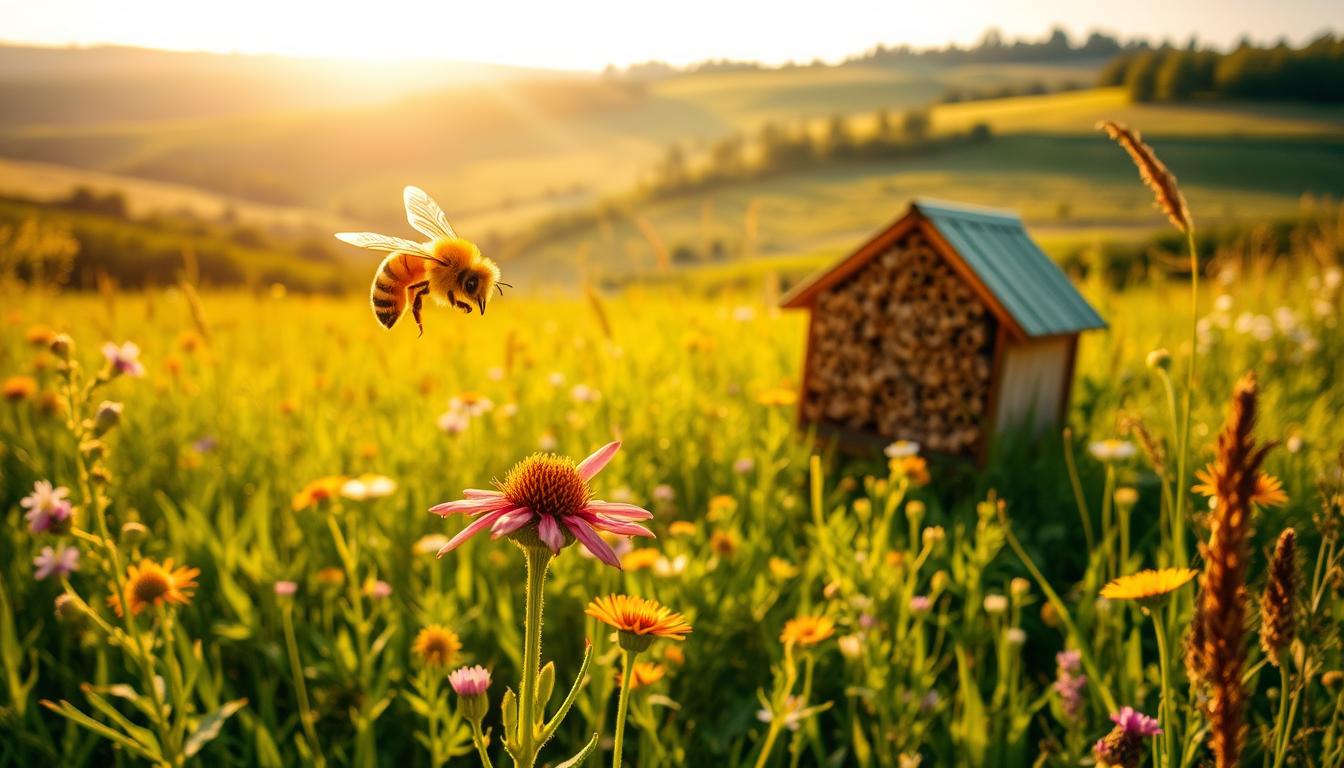
- Choose bee-friendly gardening with native plants that bloom from spring through fall.
- Skip harsh pesticides; use hand weeding and mulch instead.
- Set shallow water dishes with stones so bees can land safely.
- Leave a corner a bit wild for nesting and bee habitat restoration.
I’ve seen community gardens become small sanctuaries. A vacant lot in a busy neighborhood turns bright with coneflower and milkweed. The air itself feels kinder. In that shared space, save the bees is no longer a slogan—it’s a habit we practice together. Fairness matters. Pollinator protection should reach every ZIP code, not just leafy streets. On church grounds, at libraries, beside bus stops—anywhere neighbors gather—we can plant resilient mixes. These mixes reflect local culture and climate across the United States.
- Map sunny spots near schools for quick flower patches.
- Host weekend seed swaps featuring native and regional varieties.
- Create kid-led watering schedules during dry weeks.
As I walk home, I keep a simple test in mind: does this block welcome life? With bee-friendly gardening, the answer can be yes—one yard, one planter, one shared bed at a time. That’s how honey bee conservation grows roots we all can feel.
Understanding the Crisis: Colony Collapse Disorder and Other Threats
I remember the first time I opened a hive and heard only air. That hush is unforgettable. It made me wonder: What forces are pulling bees apart? How do we protect pollinators without losing sight of our land? Colony collapse disorder emerged like a sudden alarm. Workers disappear, the queen stays, and the brood waits. Each clue points to a web of pressure we can’t ignore.
Colony collapse disorder trends and what they signal
When losses spike, I look for patterns across regions. Some years are steady; others are not. The trend shows signs of disoriented foragers, weak immunity, and scarce blooms. What does this pattern ask of us? Research on bee health shows that small things add up. Sublethal hits can steer a hive off course. For deeper context, I look at this review of honey bee health mechanisms. It helps me understand the signals with care.
Pesticides, habitat loss, and climate stressors on bee populations
I’ve seen bees drift after contact with pesticides, as if their compasses had shaken. Habitat loss makes the buffet bare. Climate stressors add to the pressure. Each force alone is heavy. Together, they feel like a tide. I focus on changes that fit everyday life. Reduce pesticide use where we can. Plant diverse flowers near homes and crops. These choices support sustainable agriculture and feed both people and hives.
Why urban heat islands and monocultures accelerate bee population decline
City streets can hold heat like a clenched fist. On those nights, bees work harder for less nectar. Urban heat islands make flights more difficult and water scarcer. It’s quite harmful, but it builds. Monocultures bloom like a feast, then close like a door. After the rush, the ground goes mute. This emptiness speeds bee decline, even with a short season. I find hope in edges—tree lines, pocket meadows, and cover crops that stretch the season.
- Reduce chemical pressure where bees forage and nest.
- Weave shade, trees, and water into hot blocks and schoolyards.
- Swap single-crop deserts for mixed plantings that carry bees through the year.
We do not inherit the hive; we borrow it from the next hands. I want them to hear a living hum, not a warning. Every step folds back into pollinator protection. And every acre we reshape—city or farm—teaches us to listen better to the land we share.
Community Power: From Classrooms to City Halls
I believe change starts in small places, like a school gym or a circle under a maple tree. We ask ourselves, Who gets clean air? Who hears our bees in spring? In the United States, these questions lead us to community organizing and policy reform. We aim to honor everyday lives.
Mobilizing students and local leaders to “save the bees.”
Students practice their talks like athletes. They face city councils with confidence and facts. Their goal is to save the bees through practical steps and pollinator protection.
- Student science fairs become briefings for school boards on pesticide-free fields.
- PTA nights turn into plans for native plant gardens behind cafeterias.
- Local leaders invite beekeepers, Master Gardeners, and farmers to co-design weekend workdays.
This effort feels ordinary yet powerful. It’s a civic chorus in the United States, singing with data, stories, and hope.
Inclusive conservation: engaging diverse communities across the U.S.
Inclusive conservation means every neighborhood has a say. We listen in multiple languages and adjust meeting times. We hold gatherings where buses actually stop.
- Faith groups host garden builds after services, inviting elders and youth to participate.
- Tenant associations map heat islands and request shade trees and flowering strips.
- Mutual aid networks swap seedlings, tools, and rides to community nurseries.
When we widen the circle, pollinator protection becomes a daily habit, not just a headline.
Policy pathways: pesticide reform and habitat-friendly zoning
Rules shape our world. So I ask, which rules let bees thrive? In town halls across the United States, residents draft clear policy reforms and habitat-friendly zoning that match the scale of the problem.
- Restrict the use of high-risk pesticides on public lands and near schools.
- Offer incentives for native plantings in yards, medians, and campuses.
- Require pollinator-friendly landscaping in new developments.
- Set maintenance standards that protect flowering strips and reduce mowing during bloom.
Together, students, gardeners, farmers, and city staff turn a poster that says “save the bees” into real change. We make ordinances, budgets, and timelines that we can track.
Actionable Solutions: Bee-Friendly Gardening and Habitat Restoration
I keep returning to a simple truth: small plots carry big hope. When I plant, I feel the land breathe back. In the United States, each yard, balcony, and school bed can tilt the season toward life. What if we treated every patch as a promise, not a pastime?
I’ve seen how hands-on care changes us. Bee-friendly gardening turns knowledge into muscle memory. We dig, we water, we watch—and bees answer. The work feels humble, yet the impact ripples through streets, farms, and city edges.
Native plant palettes for U.S. regions to boost bee biodiversity
I start with native plants because they meet bees where they are. Aim for a steady bloom from early spring to frost. Short, bright bursts that stitch into a full season.
- Northeast and Mid-Atlantic: purple coneflower, wild bergamot, New England aster, goldenrod.
- South and Southeast: black-eyed Susan, lanceleaf coreopsis, blanketflower, bee balm.
- Midwest and Great Plains: prairie clover, milkweed, anise hyssop, sky blue aster.
- Southwest and Mountain West: desert marigold, penstemon, rabbitbrush, Rocky Mountain beeplant.
- West Coast and Pacific Northwest: California poppy, salvia, Oregon grape, seaside daisy.
Mix flower shapes and heights to support bee biodiversity. Add water dishes with pebbles. Leave a bare, sunny corner for ground nesters. It’s a small welcome, but it reads like a doorway.
Pesticide-free practices and integrated pest management at home
When pests show up, I pause before I spray. Observation comes first. Are leaves truly at risk, or can I live with a little nibble?
- Prevent with healthy soil, compost, and diverse plantings.
- Set thresholds—only act when damage passes your comfort line.
- Hand-pick, prune, and use mulch to block weeds and stress.
- Spot-treat with the least-risk options at dusk to spare pollinators.
This is integrated pest management in everyday language: prevent, monitor, act with care. It keeps bee-friendly gardening honest, and our yards safer for foraging wings.
Creating pollinator corridors and bee habitat restoration in cities and farms
I picture a map of the United States with green threads pulled tight—pollinator corridors from school gardens to parkways, from community plots to farm edges. We can stitch these lines with sidewalk planters, rain gardens, and prairie strips.
- Connect sites within walking distance: libraries, churches, food banks, and bus stops.
- Convert vacant lots into pocket meadows with native plants and seasonal bloom.
- Add hedgerows, field borders, and cover crops so fields host more than crops.
- Install small signs with plant names and invite neighbors to join in the care.
Bee habitat restoration grows stronger when everyone is invited to participate. Bring seeds, tools, and training to places long overlooked. Youth crews, weekend planting days, and shared harvests turn work into ritual. The lesson is lived, row by row.
What if every border became a bridge—and every bloom a bright, buzzing yes?
In that vision, we hold the line together. Native plants anchor it. Integrated pest management protects it. Pollinator corridors carry it farther than any one garden could.
Honey Bee Conservation: Conclusion
Standing by a patch of bee balm, I hear a low hum that sounds like a promise. I think about children in India learning by doing—rescuing snakes, tracking tigers, acting with care—and I see a mirror for the United States. When Minnesota students call for fairness and courage, they echo the same pulse. Together, these moments point to a humane path for honey bee conservation: learn in the field, share power, and let policy reflect care.
What does that look like here? We plant native flowers, avoid harsh chemicals, and support sustainable agriculture practices. We restore corridors in cities and on farms, and we cool sidewalks with trees. We teach in gardens and speak up at meetings. We vote for pollinator protection, and we ask officials to align zoning with habitat. It’s simple, but it’s not small—this is community action in motion.
When we save the bees, we also save parts of ourselves. We choose diverse crops over monocultures, and shade over heat islands. We back farmers who steward soil, and we fund school programs that spark wonder. If the smallest creatures help feed us, what do we owe them in return? A future where mornings begin with that steady hum—our quiet pledge to protect what keeps us alive.
I carry that sound with me. It reminds me that honey bee conservation is not just science; it’s a civic art. In the United States, we can plant, restore, and reform—one yard, one class, one vote at a time. Many blooms, many voices, one shared table. That feels like the truest measure of pollinator protection—and the kind of country we can become.
Honey Bee Conservation: FAQ
Why does honey bee conservation matter for the United States?
Saving honey bees is key to food, jobs, and fairness. Without bees, food prices go up and choices get fewer. This hurts poor families first. By protecting bees, we help farms, markets, and schools, making society fairer and healthier.
How do pollinators affect the economy and our breakfast tables?
Pollinators help grow fruits, nuts, and veggies, making our meals healthy and varied. They support farming that’s good for the planet and keeps food supplies steady. When bees do well, farmers make more money, and our grocery shelves stay full.
What links the bee population decline to sustainable agriculture practices?
Bee losses push us to farm better—less chemical use, more crop diversity, and healthier soil. Practices like cover crops and reduced sprays help bees and improve farming. This makes farming more stable and the water cleaner.
How does bee biodiversity make ecosystems more resilient?
Different bees do different jobs. Bumble bees fly in cooler weather, while native solitary bees pollinate specific plants. Honey bees cover large areas. Together, they keep harvests steady, making ecosystems stronger.
What can we learn from India’s hands-on wildlife education?
India’s field-based learning builds courage and empathy. Kids learn by tracking tigers and rescuing snakes. This approach can help U.S. youth protect pollinators and restore bee habitats.
How can U.S. schools adapt outdoor, field-based lessons for pollinator protection?
Turn school gardens into learning spaces. Plant native flowers, monitor blooms, and teach kids to identify bees. Map forage gaps, build bee hotels, and create pesticide-free zones. Learning becomes hands-on and local.
How do we build empathy and courage in youth to advocate for pollinator protection?
Give students real work with visible results—like planting and collecting data. Pair science with civic action: speak at city councils, sign petitions, and share stories. This builds courage and empathy.
What is Colony Collapse Disorder, and what does it signal today?
Colony Collapse Disorder is when hives lose worker bees and fail. It shows deeper issues—pesticides, disease, and poor nutrition. We need to fix the system, not just treat symptoms.
How do pesticides, habitat loss, and climate stressors harm bees?
Pesticides disrupt bees’ navigation and immune systems. Habitat loss cuts off food sources. Climate changes disrupt bloom times, leaving bees hungry. These pressures weaken colonies and reduce bee diversity.
Why do urban heat islands and monocultures speed up bee population decline?
Hot cities dry out flowers and stress bees. Monocultures offer short food bursts and long gaps. Shade and diverse plantings cool cities and extend forage, slowing decline.
How can students and local leaders mobilize to “save the bees”?
Form coalitions with schools, gardeners, farmers, and parks. Propose pesticide-free lands, native plant laws, and mowing calendars. Use public talks, plantings, and workshops to build support.
What does inclusive conservation look like in practice?
It brings resources to all neighborhoods, not just the greenest. Offer native plants, tools, and training where needed. Choose culturally relevant plants and celebrate diverse voices in decision-making.
Which policy pathways can protect pollinators at scale?
Reform public pesticide use, require bee-friendly landscaping, and fund habitat restoration. Encourage integrated pest management in cities and farms. Align zoning and incentives with pollinator protection.
What native plant palettes boost bee biodiversity across U.S. regions?
Aim for continuous bloom. Northeast—bee balm, goldenrod, New England aster. Southeast—purple coneflower, coreopsis, black-eyed Susan. Midwest—milkweed, prairie clover, blazing star. Southwest—desert marigold, penstemon, sunflower. West—California poppy, buckwheat, ceanothys.
How do I practice pesticide-free, bee-friendly gardening at home?
Start with healthy soil, mulch, and diverse native plants. Hand-weed, spot-treat with soaps or oils, and use traps before sprays. Use integrated pest management—set thresholds, encourage predators, and time treatments when bees aren’t flying.
How do we create pollinator corridors in cities and on farms?
Connect small habitats into a network—school gardens to parkways, roadside prairies to field edges, balconies to rooftops. Add water sources, nesting sites, and bloom sequences. Even narrow strips can guide bees across hardened landscapes.
How does bee habitat restoration intersect with food justice?
Protecting pollinators supports affordable, nutritious foods in every community. Planting in underserved areas, near schools and markets, strengthens local harvests and health. Food security becomes a shared promise, not a privilege.
What immediate steps can a household take this season?
Plant three native species—spring, summer, fall. Leave some bare soil and stems for nesting. Ditch routine sprays. Add a shallow water dish with stones. Talk with neighbors and build a block-wide bee-friendly gardening plan.
How can farms balance yields with pollinator protection?
Integrate flowering cover crops, hedgerows, and reduced-till practices. Rotate crops and diversify field edges. Use integrated pest management and avoid spraying during bloom. This leads to steadier yields, healthier soils, and stronger pollination.
Where can communities start if resources are limited?
Begin with one visible site—a school garden or a vacant lot. Host a planting day, install signage, and set simple maintenance routines. Seek small grants, nursery donations, and volunteer crews. Success spreads by example.