Beehive Rehabilitation Tips: Wondering how to bring a hive back to life after winter. In my apiary, we start with care and grow hope. When the sun hits 50°F, we see a chance for the hive to revive. At The Bee Foundation, we follow a simple plan. We check the hive’s health, look for signs of a strong queen, and ensure there is enough food.
These steps are not just tasks; they’re a way to care for our bees. When the hive seems hungry, we feed it with a mix of sugar and pollen. We clean the hive, remove mold, and let it dry. If the queen is weak, we introduce a new one. If the hive is too small, we merge it with a bigger one. This is more than work; it’s a way to help our bees thrive. Outside the hive, we also support.
We plant flowers early and provide water for the bees. We learn to identify different insects and even help a bee in trouble. Every small action helps in saving our pollinators. These efforts bring spring closer.
Beehive Rehabilitation Tips Key Takeaways
- Start beehive rehabilitation with calm inspections once temperatures exceed 50°F.
- Use simple cues—cluster size, fresh brood, and food stores—to guide hive recovery.
- Support bee colony revitalization with 1:1 sugar syrup, pollen patties, and same-colony honey frames.
- Improve pollinator health by clearing debris, repairing equipment, and venting moisture.
- If needed, requeen carefully or merge weak colonies to stabilize the apiary.
- Extend care beyond the hive by planting early-blooming natives and providing safe water sources.
- Treat every step as part of a thoughtful honeybee rehabilitation project grounded in patience.
Post-Winter Hive Recovery and Inspection for Hive Health
I wait for the first warm day above 50°F. Then, I open the hive like a diary. It’s my quiet time to check on the hive’s health. I look for signs of strength and what needs healing during hive recovery.
Assessing colony strength and cluster size once temperatures exceed 50°F
During a calm hive inspection, I study the cluster. Is it strong, centered, and buzzing? I check the frames, the bees’ mood, and the warmth. This first look helps me plan for hive recovery. I also watch the entrance. Foragers may fly in short bursts, while guards stand firm. If the cluster is small, I wonder if I should help without disturbing too much.
Verifying queen presence through fresh brood in multiple stages
A queen-right colony shows its health in eggs, larvae, and capped brood. I look for a steady pattern across frames. Fresh eggs and calm nurse bees are key signs. If I don’t see the queen, the brood tells me her story. Gaps can mean many things—space, temperature, or timing. I pause, breathe, and let the brood guide me.
Checking food stores and early-season resources
Early spring can be a feast that arrives late. I check the boxes’ weight and the honey and pollen stores. If stores are low, I plan to help while keeping the brood warm and safe. A steady hand now prevents panic later.
- Honey frames near the cluster for quick energy
- Pollen sources to fuel brood care
- Clean water nearby to ease foraging stress
Identifying signs of disease, mold, or pests after winter
I clear winter debris and examine the bottom board. I look for signs of Nosema and Varroa thresholds. Mold on the outer frames might be from cold corners, but I stay alert. This is a gentle post-winter assessment, not a trial. I listen for balance: clean comb, a calm cluster, and a brood scent that says spring is coming. In this quiet, I decide what to do and what to let the bees do for themselves.
Emergency Feeding and Nutrition Strategies for Hive Recovery
I stand at the hive and listen. Hunger whispers first, then silence. In these early days of hive recovery, I focus on simple choices. Energy, protein, and water are key to bridging the gap between frost and bloom. I ask myself: what fuels a quick lift without stirring chaos? Clean, timely steps keep momentum while the bees find their rhythm again.
Using 1:1 sugar syrup to fuel early foraging and brood rearing
When nectar runs thin, I use 1:1 sugar syrup. It wakes foragers and steadies brood rearing. I place it inside the hive toward evening to quiet robbing and keep traffic calm. Measured, fresh, and warm—not hot—keeps it safe. For more on ratios and timing, I trust this practical guidance on feeding honey bees to prevent starvation. Small choices shape significant outcomes in hive recovery.
Supplying pollen patties for protein to support bee colony revitalization
Energy lifts wings, but protein builds bodies. I offer pollen patties near the brood nest, so nurse bees don’t have to wander. The result feels almost like spring arriving early—steady eggs, humming cells, a bee colony revitalized, showing up as a warm, growing cluster. I watch intake and adjust. Too much can crowd the brood; too little stalls momentum. Balance keeps the hive in tune.
Reinstalling stored honey frames from the same colony
If I saved honey frames last season, I return them now—but only from the same colony. That keeps pathogens out and trust intact. The familiar scent draws workers, and the comb gives quick calories without confusion. This step pairs well with emergency feeding, letting the bees choose what they need first and easing stress during hive recovery.
Setting up safe water sources with pebbles to prevent drowning
Water is the quiet nutrient. I set out a shallow dish near the apiary and fill it with stones so there’s safe water for bees—no slipping, no panic. On hot days, I add more landing spots and keep it topped up.
- Pebbles or corks for stable footing
- Shade to slow evaporation
- Regular refills to build a reliable habit
I’ve seen dozens spared this way, their tiny bodies fanning back at home. Simple acts—1:1 sugar syrup, pollen patties, and a calm water station—turn emergency feeding into quiet strength that carries the colony forward.
Cleaning, Maintenance, and Ventilation for a Healthier Apiary
I start spring with a simple promise: clear space, let air move, and listen for the low hum of return. Good hive ventilation begins with small, mindful acts. When the boxes breathe, the bees breathe too. Isn’t that the quiet goal of care?
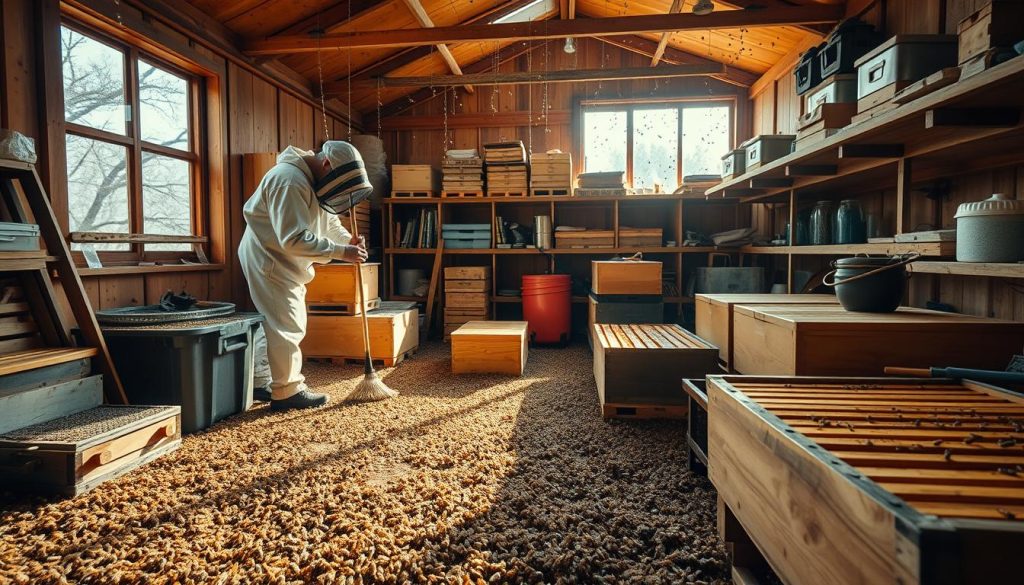
Every step here aims to gently control moisture and prevent mold. I believe a healthier apiary is built on habits, not heroics. Even a few minutes with a scraper and a fresh eye can change the colony’s season.
Removing winter debris and dead bees to improve airflow
I start by easing open the bottom board and clearing winter’s leftovers. Dead bees and bits of wax can clog vents and block hive ventilation. I remove what doesn’t belong, then pause—can I feel the draft again? Once the passage opens, air slides through the entrance, lifting dampness and stale scent. This small reset steadies moisture control and slows mold before it gains a foothold.
Inspecting and repairing hive bodies, frames, and entrance reducers
Next comes a slow check of wooden edges and seams. I’m cleaning hive bodies with a light touch, then looking for splits, rot, or loose joints. Equipment repair is not vanity; it’s a pledge to the lives inside. Warped frames bow under load, inviting gaps where cold seeps in. I replace what fails and sand what snags. Solid corners and snug reducers calm drafts and nudge the yard toward a healthier apiary.
Tilt and inner cover adjustments to reduce moisture buildup
Moisture is a patient guest, so I tip the hive slightly forward. Condensation slides out the entrance rather than dripping onto the cluster. Inner covers must exhale; I make sure they vent warmth without bleeding it away. With each small change, I ask: Is the air warm, dry, and moving? If yes, mold prevention follows, and the bees set their rhythm. When I’m unsure, I lean on shared wisdom and support efforts like this healthier apiary initiative that keep the work going.
Clear, sound, and open—those are the three notes I aim for, season after season.
Bee Identification and Immediate Aid for Individual Bee Recovery
I tiptoe through the yard, listening for the buzz of a bee in need. Identifying bees is the first step in helping them. Every rescue is a promise to protect these vital creatures. By helping, I also support urban bee conservation. Small actions in our yards can make a big difference in our communities.
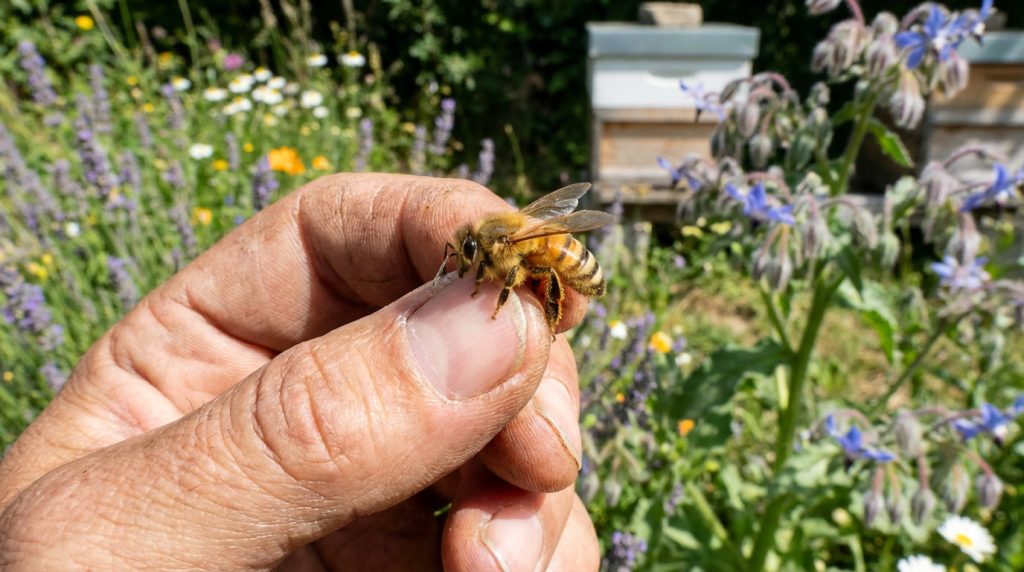
Distinguishing bumble bees, honey bees, and carpenter bees in the field
Bumble bees are big and fuzzy. Queens are extra large in spring or fall. Honey bees are smaller with light-and-dark bands. Carpenter bees are big and shiny. In the East, males have pale yellow masks and look worn. Flies look like bees but have short antennae and big eyes. Wasps sip nectar and pollinate, but rarely sting unless defending their young. Knowing the difference helps us act quickly and carefully.
Reviving chilled or waterlogged bees with sunlight and sugar-water
When I find a bee that’s not moving, I start with sunlight and sugar-water. Sometimes, a gentle breath can help warm them up. Practical steps for reviving bees require calm and patience. As they dry, I watch for signs of life. A small stretch of wings or a buzz is a good sign. It’s like the world is breathing again.
Overnight care for cold bumblebee queens in ventilated boxes
When it gets cold, I provide shelter for bumblebee queens. A ventilated box with a soft floor and sugar water helps them survive the night. By morning, they’re ready to fly again. This care is a small act of kindness. It helps the queen start a new colony, bringing life to our gardens.
Providing shallow water stations to reduce pool rescues
Bees need water to cool their nests, but pools can trap them. I use shallow water stations with pebbles to keep them safe. A saucer in the sun with stones and a morning refill is all they need. This simple act supports urban bee conservation. I encourage neighbors to join me by pointing them to trusted resources and inviting them to set up their own water station.
- Spot fast: fuzzy bumble, banded honey, shiny carpenter.
- Warm first: sunlight, then sugar-water, then space.
- Shelter wisely: a ventilated box for cold bumble queens, release at dawn.
- Prevent risk: pebble-filled dishes as everyday shallow water stations.
Beekeeping Decisions: Requeening and Merging Weak Colonies
I stand at the hive and ask a simple question: what gives this colony its chance to thrive? Sometimes the honest answer is complex. Yet I’ve learned that timely requeening or a careful weak colony merge can spark bee colony revitalization without drama—just patience, scent, and trust. Small moves change the season. I breathe, watch the workers, and listen for that thin, restless hum that hints something is off. Then I move with care, not haste.
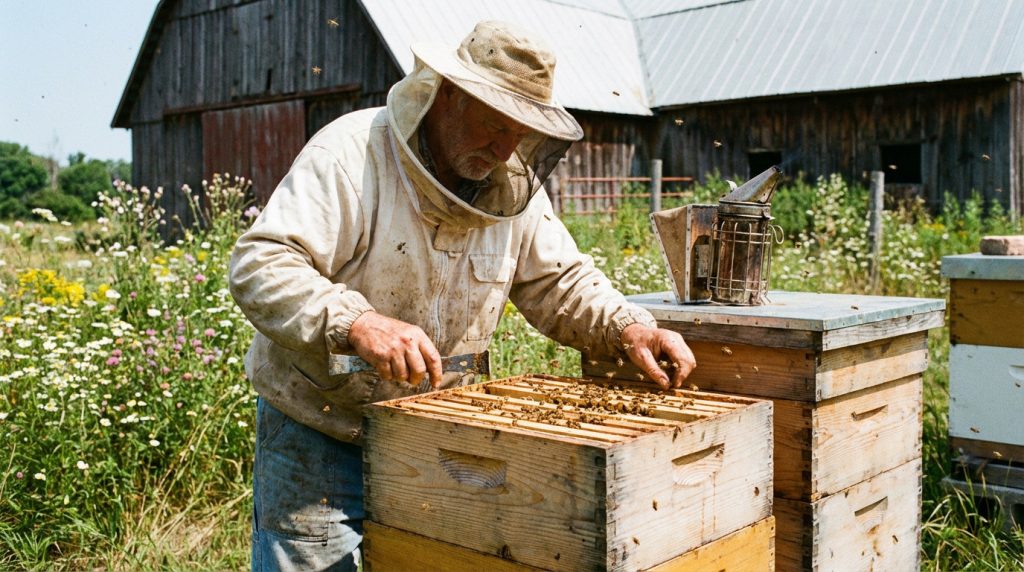
Evaluating a failing queen and sourcing a vigorous replacement
I look for scattered brood, drone drift, and a shrinking pattern. If the queen is sluggish or missing, requeening is the humane option. I source a young, mated queen from a trusted U.S. breeder, such as Kona Queens or Olivarez Honey Bees, aiming for a steady temperament and consistent laying. Why wait for luck when a fresh start is at hand? A strong mother restores rhythm, boosts worker morale, and sets the hive back on its arc toward revitalization of the bee colony.
Introducing a new queen safely with a cage to minimize rejection
I place the newcomer in a queen introduction cage and let time do its quiet work. Workers test her scent, then accept what patience allows. A slow-release lets pheromones weave through the frames and lowers the risk.
- Check for open brood and reduce stressors.
- Keep the candy plug intact at first, then allow release.
- Observe calm behavior before removing the cage.
In that pause, the hive exhales—and requeening becomes a bridge, not a shock.
Using the newspaper method to merge weak colonies with stronger hives
When a colony cannot stand alone, I choose the newspaper method for a gentle, weak colony merge. A single sheet separates boxes; bees chew through it at their own pace, blending scent and purpose. I’ve watched this slow union mellow hot tempers. What seems like loss becomes grace: two rhythms meeting in the middle, and bee colony revitalization following close behind.
- Match healthy frames above steady brood.
- Use one queen—the best one—before the merge.
- Let the newspaper method finish before adding space.
Stewardship isn’t force—it’s timing, touch, and faith that small, careful choices can tilt life back toward balance.
Beehive rehabilitation
I used to think beehive rehabilitation was just a list. Now, it feels like a deep connection—a steady flow of care and patience. I start when the air gets warmer, moving slowly and listening carefully. What does the colony need today? On quiet mornings, I move with care. I check the frames, remove winter debris, and offer food when it’s needed. I make sure the space is open and dry, then let the bees work at their own pace.
Isn’t the accurate measure when my help becomes their strength? When I call this work a honeybee rehabilitation project, I see small acts that rebuild trust. I warm a chilled forager in the sun. I provide clean water and safe landing spots. I return their honey to them. Each action says, “I see you.” The heart of any beehive restoration program is knowing when to step back.
I plant early flowers, keep the water source steady, and wait. Bees know how to fix the season. My job is to clear the path and use honest tools. These choices are part of bigger efforts to protect apiaries. I read field notes, learn from others, and support community bee advocates. Our goal is simple yet powerful: give the hive space to find its balance again. I stand beside the boxes, listening for that low, confident hum. When it returns, I step back, grateful.
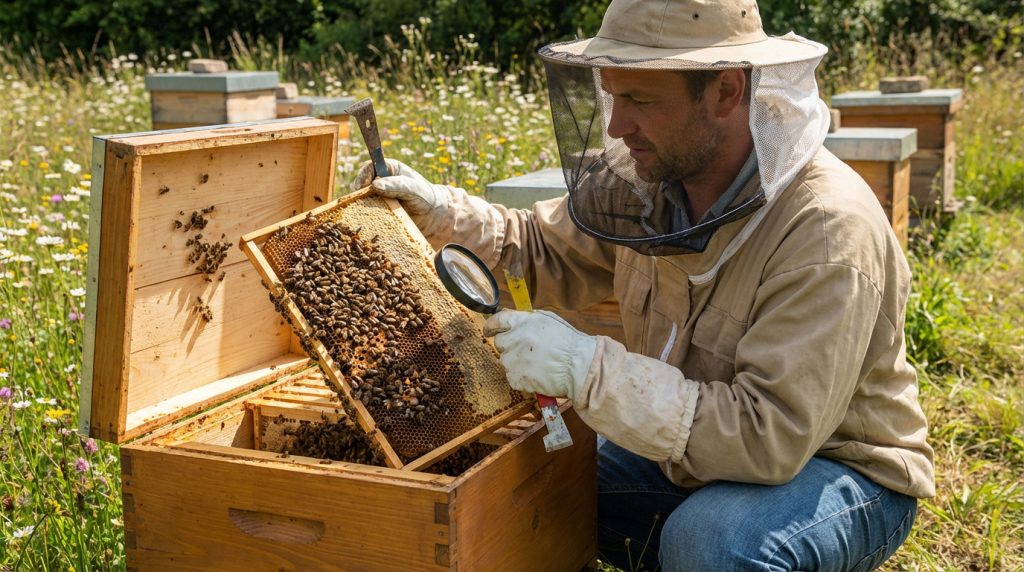
Pest and Disease Monitoring in Spring Recovery
I step to the landing board like a doctor to a bedside. Spring brings second chances, but I wonder what winter left behind. I look, listen, and breathe, because early care is quiet and wise. I read the frames the way sailors read clouds. Patterns tell stories, guiding our actions. I focus on moisture control, hive hygiene, and the signs of stress or instability.
Running sugar roll or alcohol wash tests for varroa thresholds
I use sugar roll or alcohol wash tests to count mites. Numbers are key. When varroa thresholds are met, I act early, using approved treatments to avoid harm.
- Collect a consistent bee sample from the brood nest.
- Measure, record, and compare varroa thresholds across weeks.
- Respond early so growth favors bees, not mites.
Recognizing Nosema signs and maintaining hive hygiene
At the entrance, I watch for Nosema signs: tan streaks, sluggish workers, uneven flight. I focus on hive hygiene—scraping mold, swapping frames, and cleaning feeders—to reduce stress and disease.
- Keep tools clean and rotate the contaminated comb out.
- Use fresh syrup containers and rinse between refills.
- Anchor the work in compassion and data; I also learn from resources like trusted bee safety efforts that widen our collective map.
Moisture control and dry interiors to deter fungal issues
Water can quietly sabotage us. Thoughtful moisture control—top ventilation and a slight forward tilt—lets condensation leave. A dry interior prevents fungal issues like chalkbrood and soft rot.
- Open airflow paths without chilling the cluster.
- Replace wet or moldy components to reset the microclimate.
- Pair ventilation with sunlit inspections to verify fungal prevention is working.
Light, air, and space form a pact with resilience—when we honor them, the hive answers with calm.
I also notice the visitors. Some wasps pollinate. Some flies mimic bees. Their cool-weather cameos don’t always indict the colony.
The task remains human and straightforward: observe, adjust, and keep faith with the small routines that help life take root.
Pollinator Habitat Restoration and Foraging Support
I walk my yard and listen for a hum. What if we could plant care, one square foot at a time? I vow to help the bees and make the city breathe better. Neighbors ask where to start. I think of simple acts that add up. I imagine a map of hands passing nectar across fence lines. This turns a block into a living network. Planting early is key when winter ends. I follow Blythewood Bee Company’s advice. I plant early-blooming natives like crocus and dandelion to provide forage for bees.
Planting to Jump-Start Nectar and Pollen Flow
I group flowers by bloom time to keep the buffet open. In sun spots and along fences, I plant bulbs, shrubs, and cover crops. This way, the first flights become steady work for the colonies. When I share this plan, friends nod and join me. We compare notes from urban bee conservation updates and trade seeds. Our small plots become a steady pulse.
Creating Corridors and Sanctuary Zones
I imagine a thread connecting park strips, school gardens, and balconies. Urban bee conservation needs safe zones. These include no-spray edges, diverse blooms, and bare soil for native nesters. I mark bee sanctuary zones with signs. This makes people pause before mowing or spraying. The street softens, and the city hums again.
Providing Water for Hydration and Hive Cooling
Water is both work and mercy. I set out shallow dishes with pebbles and corks for the bees to sip from. On hot afternoons, they carry water home for cooling, each trip a lifeline. I refresh the dishes often and keep them in the shade. This habit becomes a ritual, helping the apiary stay steady under the heat. What if every yard gave a little? I keep asking. Small steps in pollinator habitat restoration feel like a shared heartbeat. Tending to early-blooming natives, marking bee sanctuaries, and providing water turns care into a daily practice.
Sustainable Beekeeping Initiatives and Apiary Conservation Efforts
I see sustainability as using memory to guide us. Each hive teaches us to act early. This is how sustainable beekeeping meets daily tasks and wise decisions.
Planning supers and space to prevent overcrowding and swarming
When bees make new wax and gather nectar, I add more space. This is done when the hive is about seventy percent full. It keeps the bees calm and prevents swarming. Why wait for a beard at the entrance when balance is an option? Early planning helps the bees stay in rhythm. It also supports larger efforts to keep colonies stable.
Record-keeping to track hive recovery trends and treatments
I write down everything: dates, brood notes, feed amounts, mite counts, and any thymol rotations I test. Good record-keeping helps me make better decisions next season. These records also help me teach others. They show how to care for bees after winter.
Community outreach and honeybee rehabilitation projects
On my own, I can care for a few hives. Together, we can help more. I share tips at local meetups and invite people to join a honeybee rehabilitation project. Learning together keeps the effort going. It also helps get funding for tools and education.
Integrating beehive restoration programs in suburban and urban settings
In cities and suburbs, beehives can be a quiet, strong presence. We add native plants, wind breaks, and water trays. This turns hard edges into foraging areas for bees. I use guides and notes to place hives well. This way, they get the right amount of sun and air. For more on why this matters, I look at conservation efforts. Small yards help make a big difference. It feels like we’re all working together. In the end, it’s simple: supers, space, keeping records, and reaching out. These actions add care to our cities and countryside.
Beehive Rehabilitation Tips Conclusion
I end the season with a promise. Beehive rehabilitation is not just one action; it’s a rhythm we learn. Warm days over 50°F mean we check the hives carefully. We look for fresh brood to know the queen is there. We feed them 1:1 syrup with pollen patties to keep them full. We use honey frames from the same colony to help them recover. We clean up debris, fix boxes, and tilt the hive to keep it dry. If the queen fails, we replace her with great care. If a colony weakens, we merge it with another by using patience and a newspaper. This work touches us deeply. We can tell a bumblebee queen by her size and fur. We know a honey bee by its long antennae. We rescue a wet forager from a birdbath and dry her off. We use pebbles in a dish to prevent her from slipping. We keep the hive dry to avoid chalkbrood.
We watch for signs of Nosema at the entrance. We count varroa mites to plan our next steps. Each small action helps the hive recover. This care spreads out like a wave. Early flowers feed the bees, and we work to restore habitats. We add supers before the busy season, keep clean records, and join conservation efforts. We work together in our community, sharing knowledge and helping each other. This reminds us of the power of teamwork, just like in mental health research. The core of sustainable beekeeping is simple: watch, adjust, and share. The hive teaches us this every spring. With consistent care and small acts of kindness, we can bring the apiary back to life.
Beehive Rehabilitation Tips FAQ
How do I assess colony strength and cluster size once temperatures exceed 50°F (10°C)?
How can I verify the queen’s presence if I can’t spot her during inspection?
What food stores should I check in early spring, and how do I support the colony if they’re low?
What are the key signs of disease, mold, or pests after winter?
How does 1:1 sugar syrup help early foraging and brood rearing?
Why do pollen patties matter for bee colony revitalization?
When should I reinstall stored honey frames, and why must they be from the same colony?
How do I set up safe water sources with pebbles to prevent drowning?
Why remove winter debris and dead bees from the bottom board?
What should I inspect and repair on hive bodies, frames, and entrance reducers?
How do tilt and inner cover adjustments reduce moisture buildup?
How can I distinguish bumble bees, honey bees, and carpenter bees in the field?
What’s the best way to revive a chilled or waterlogged bee?
How do I care for a cold bumblebee queen overnight?
How do shallow water stations reduce pool rescues?
When should I evaluate a failing queen and look for a vigorous replacement?
How do I introduce a new queen with a cage to minimize rejection?
How does the newspaper method safely merge a weak colony with a stronger hive?
What does beehive rehabilitation mean in practice?
How do I run sugar roll or alcohol wash tests to set varroa thresholds?
How do I recognize Nosema and keep the hive hygienic?
Q: Why is moisture control key for preventing fungal issues like chalkbrood?
Q: Which early-blooming natives jump-start nectar and pollen flow?
Q: How do I create urban bee conservation corridors and bee sanctuary zones?
Q: What water sources best support hydration and hive cooling?
Q: How do I plan supers and space to prevent overcrowding and swarming?
Q: Why does record-keeping matter for hive recovery trends and treatments?
Q: How can community outreach fuel honeybee rehabilitation projects?
Q: How do I integrate beehive restoration programs in suburban and urban settings?